About
Last Furniture
Last Furniture is my way of bringing something back to our society—something that seems to have been lost over the past few generations.
In a world that’s moving faster by the day, where modern technology connects us more than ever, many of us are feeling increasingly disconnected.
You probably remember that one item in your grandparents’ or parents’ home—the one that was always there. It survived not just because it was well-made or beautiful, but because it was cared for. It was protected. Our ancestors had a different kind of commitment. When resources were scarce and things weren’t easily replaced, they chose quality over quantity and found contentment in what they had.
That’s the spirit I strive to continue.
With Last Furniture, I aim to build timeless pieces that will outlast a single lifetime—furniture meant to be passed on through generations. I draw inspiration from vernacular designs, traditional construction methods, and local materials. Just a few centuries ago, everything was made by hand, and nothing was treated as disposable. The time, care, and labor invested in each piece made it valuable—not just in use, but in meaning.
About
Peter Finger
I’m a self-taught furniture maker from Germany.
Handcrafted items—especially furniture and anything made from wood—have always drawn my attention. I remember being captivated by the antique pieces in my grandparents’ homes: the Jugendstil chest of drawers in the house where my mother grew up, and the simple, vernacular nightstand on my father’s family farm.
While my grandfather and uncle were horseshoe farriers, my father pursued an academic path, and my mother followed her father into teaching. I grew up in a suburban area, where the craft-oriented side of my family had only limited influence on my daily life. But whenever I had the chance to visit my grandparents' farm or step into my uncle’s workshop, something in me lit up.
At first, I followed in my father’s footsteps and studied mechanical engineering. It wasn’t until later in university that I started to feel a deep regret—I wished I had chosen a trade apprenticeship instead. Still, I went on to work in mechanical engineering for nearly ten years—and I continue to do so today.
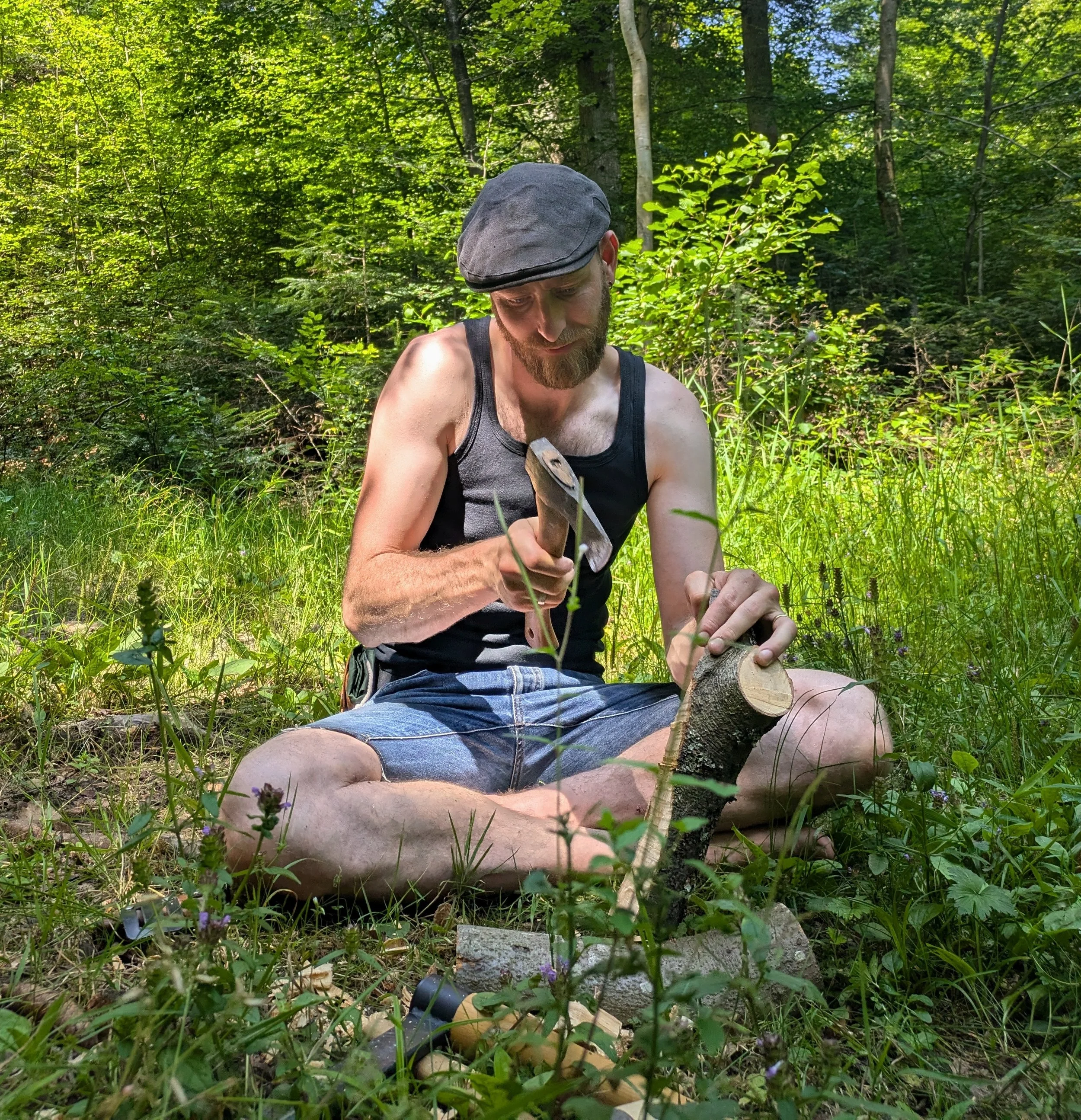
Yet, I’ve never let go of the idea of working as a furniture maker. Building things comes naturally to me. Whenever I need something, my first thought is: can I make it myself? Over the years, I taught myself how to restore, set up, and use vintage hand tools, and developed a deep passion for pre-industrial woodworking. I started focusing on hand-tool-only projects, exploring how craftsmen built furniture up until the first half of the last century. While machines now handle the heavy lifting in my shop, the handwork is what brings each piece to life.
So here I am—still learning, still building, and using every free moment to deepen my craft and make the best furniture I can.